Professional skills, a term that carries significant weight in the job market and career development, will be the focal point of our discussion. Our exploration will span various types of these skills, their significance, and how they can be cultivated and harnessed for career progression.
By understanding the landscape of professional skills, you can better position yourself for success in the competitive job market. It is crucial to continuously update and adapt your professional skills to stay ahead in a rapidly changing work environment. By investing in your professional development, you can enhance your employability and open doors to new opportunities.
Related articles:
What are the Best Employee Engagement Strategies?
What A Strategic HR Agenda Should Look Like In 2024
What are Professional Skills?
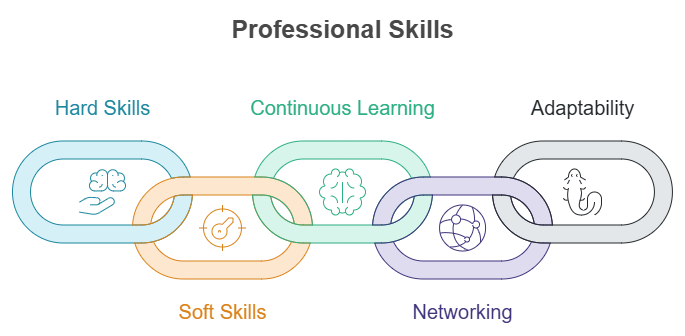
Professional skills are a set of abilities and competencies that you acquire and improve over time, which enable you to perform your job efficiently. These can be classified into two broad types: hard skills and soft skills:
Hard skills are job-specific skills and proficiencies that are teachable and often measurable, like proficiency in a foreign language or ability to use computer software.
Soft skills, on the other hand, relate to your interpersonal and communication skills, problem-solving abilities, and emotional intelligence.
Both hard and soft skills play a critical role in your professional success, helping you to effectively execute your job roles, collaborate with colleagues, and evolve within your career.
Frequently Asked Questions
What are examples of professional skills?
- Communication Skills: These are essential for almost all jobs. Good communication skills enable you to articulate your ideas clearly, listen to others effectively, and work well in teams. They can also include written skills, which are vital for crafting emails, reports, and other professional documents. In the context of text recruiting software, strong communication skills are particularly important for engaging with candidates and ensuring clear, concise messaging throughout the recruitment process.
- Leadership Skills: Even if you’re not in a managerial role, leadership skills are important. They include the ability to inspire and guide others towards achieving a common goal, decision-making abilities, and strategic thinking.
- Problem-Solving Skills: In any job, problems will arise. The ability to identify, analyze, and come up with effective solutions to these problems is a highly valued skill in the workplace.
- Technical Skills: Depending on the field you’re in, these can vary greatly. For example, if you’re in a data-driven field, skills in data analysis or knowledge of specific software like Excel or SQL would be advantageous.
- Time Management Skills: The ability to prioritize tasks, work efficiently, and meet deadlines is crucial in any professional setting. Good time management often leads to increased productivity and job satisfaction.
- Presentation Skills: The ability to effectively deliver information to an audience is a key professional skill. This includes structuring your content for clarity and engaging your audience. Strong presentation skills help you communicate ideas, persuade stakeholders, and establish credibility in your field.
How can I develop my professional skills?
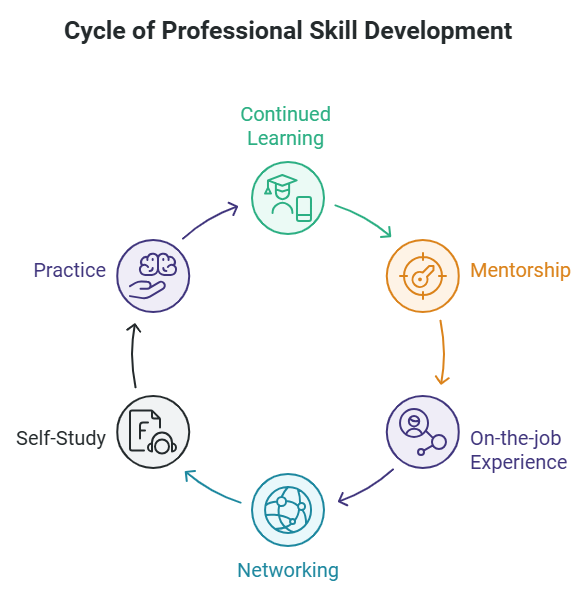
There are several ways to develop your professional skills:
- Continued Learning: Engage in lifelong learning by attending workshops, enrolling in online courses such as those offered by Promova, or participating in webinars that focus on the professional skills you wish to develop.
- Mentorship: Find a mentor in your field who can provide guidance, share their experiences, and offer feedback on your progress. For those pursuing a career in marketing, connecting with a digital marketing mentor can be invaluable. Such mentors not only provide industry-specific insights but also help navigate the evolving landscape of digital tools and trends.
- On-the-job Experience: Exposing yourself to different roles or projects at work can help you acquire and hone new skills.
- Networking: Attend industry events and meet professionals who can share insights and advice based on their experiences. Share a smart contact card at these events to help you get in touch with these professionals even after the event is over to continue your learning journey
- Self-Study: Use books for personal growth, podcasts, and educational resources to deepen your understanding of specific skills.
- Practice: Regularly practicing your skills can improve your proficiency and confidence.
Are hard skills more important than soft skills in the workplace?
Neither hard skills nor soft skills outweigh the other in importance in the workplace — they’re both crucial for success. Hard skills, or technical skills, pertain to the specific knowledge and abilities required for a job, such as coding for a software engineer. They’re often quantifiable and can be learned through formal education or training.
Soft skills, on the other hand, are intangible attributes that influence how one interacts with others, like communication or problem-solving. They’re harder to quantify, but they play a significant role in fostering positive workplace relationships and enhancing overall job performance. In an ideal situation, employees should possess a balanced blend of both hard and soft skills.
Can you improve your soft skills, and if so, how?
Improving your soft skills is definitely possible, and there are various approaches you can take. First and foremost, it’s important to be self-aware of your strengths and weaknesses and seek feedback from colleagues and mentors. Education also plays a significant role in enhancing soft skills. Numerous online platforms offer courses specifically designed to improve communication, leadership, and emotional intelligence. These courses provide practical tips and exercises that you can incorporate into your daily life.
Practice is key when it comes to developing soft skills. Consistent practice allows you to hone these skills, such as seizing every opportunity to speak in public to improve public speaking skills. Seeking feedback from colleagues, mentors, and managers is crucial to gain valuable insights.
Additionally, observation of successful individuals in your field can provide effective methods for enhancing soft skills. Remember, improving soft skills requires time and patience, but with consistent effort and dedication, you can undoubtedly enhance these skills over time.
How can you evaluate someone’s skills in a job interview?
Demonstrating professional skills in a job interview can be accomplished in several ways. First, they need to thoroughly understand the job description and identify the skills that the employer is looking for. Once they’ve done that, they should prepare specific examples from their past experiences where they’ve utilized these skills effectively. The STAR (Situation, Task, Action, Result) method can be used to structure your responses and provide concrete results to illustrate your capabilities.
Additionally, showing that they have taken the initiative to improve and learn new skills can be something to look for as well. This could involve mentioning or any relevant courses they’ve taken, such as Salesforce training courses, or projects they’ve completed.
Soft skills, though harder to quantify, can be demonstrated by behavior during the interview. For example, effective communication can be shown through clear and concise responses, while problem-solving can be highlighted by discussing how they’ve dealt with challenges in the past. Their ability to maintain composure and engage in a pleasant conversation can reflect their interpersonal skills.
Finally, they should ask insightful questions at the end of the interview – this shows their enthusiasm for the role and the industry.
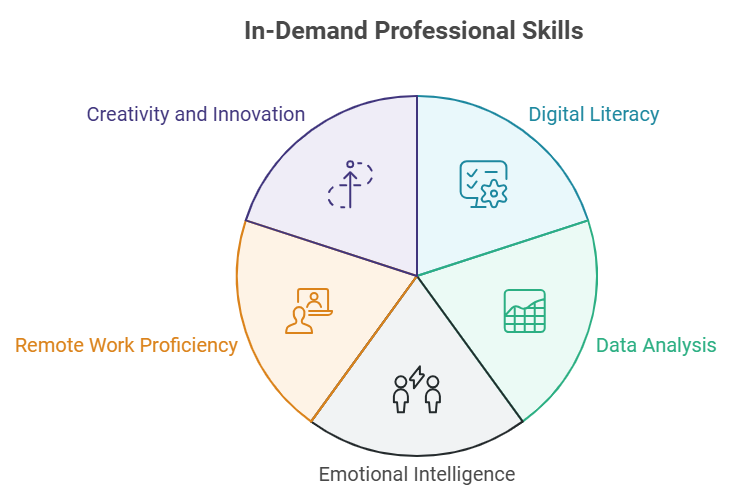
What are some of the most in-demand professional skills in today’s job market?
- Digital Literacy: As we become increasingly reliant on technology, digital literacy has become a vital skill. Understanding how to utilize digital tools, such as social media, cloud-based applications, marketing attribution tools, and digital marketing platforms, can greatly increase employability.
- Technical Expertise: A deep understanding of the digital products or services allows for efficient troubleshooting and problem-solving which could leads you to a great opening in customer support industry.
- Data Analysis: With the surge of big data, professionals with the ability to collect, analyze, interpret, and present data are in high demand. This skill can help companies make informed decisions and develop strategic plans.
- Emotional Intelligence: This is the ability to recognize, understand, and manage our own emotions and the emotions of others. In the workplace, it can contribute to improved teamwork, leadership, and customer relations.
- Remote Work Proficiency: The COVID-19 pandemic has led to a significant increase in remote work. As a result, skills like self-discipline, communication, and collaboration in a virtual environment have become essential.
- Creativity and Innovation: As industries evolve, the ability to think outside the box and develop innovative solutions is highly valued.It can lead to the development of new products, services, or creative formats like a flipbook magazine, giving companies a competitive edge in the market.
How do you effectively showcase professional skills on a resume?
Showcasing your professional skills on your resume effectively begins with tailoring your skillset to the job description. Identify the skills that are most relevant to the position you are seeking and make sure these are prominently displayed. Use specific and quantifiable examples to demonstrate your proficiency. For instance, instead of simply stating you have “digital literacy”, you might say “Leveraged social media marketing and digital marketing platforms to increase brand awareness by 40%”.
Equally important is to showcase your soft skills, such as emotional intelligence. You could illustrate this by mentioning a time when you navigated a team conflict and brought a project to successful completion. Remember, employers are not just looking for technical abilities, they’re also seeking individuals who can fit into the company culture and work well with their existing team.
If you’re unsure whether your resume is hitting the right marks, you might consider using a resume fixer or a resume website to help you refine and optimize your document. Executive resume writers can fix and provide insights on improving clarity, highlighting key skills, and ensuring your resume stands out to employers.
How often should someone update or acquire new professional skills?
In today’s rapidly evolving job market, it’s crucial to regularly update and acquire new professional skills. The frequency with which you should do this can vary depending on your industry and role. For some, upskilling every few months might be necessary, especially in fast-paced industries like tech or digital marketing where advancements and trends change swiftly. For others, once a year may suffice.
However, as a general rule of thumb, consider reassessing your skills and learning needs annually. Always be mindful of the latest industry trends and demands, and be proactive in seeking out learning opportunities. This continuous learning not only enhances your professional capabilities, but also increases your marketability in the job market.
Can professional skills help you transition to a new career?
Transferable skills, both hard and soft, are essential in such transitions. For instance, your expertise in project management, software development, or digital marketing can open doors in industries where these skills are in demand. Similarly, soft skills like leadership, teamwork, and communication are highly valued across all industries.
Additionally, the ability to learn and adapt to new environments is a critical asset. It’s important to identify and articulate these transferable skills when considering a career change. Remember, every skill and experience you’ve acquired can potentially be leveraged in a new role or industry.