 PeopleSpheres
 Every organization wants systems that work quickly and are interconnected to manage the workforce. With an Integrated Human Resource Information System (HRIS), you can easily tally payroll with recruitment on the same digital platform, access performance tracking, and stay within compliance, all in real time. It is as if you just hired an HR assistant to organize these processes for you.
An integrated HRIS consolidates all your HR data and tools in one central location. It automates routine tasks and provides leaders with useful insights without requiring extra effort. No one has to juggle spreadsheets, switch between different software, or send endless emails to find answers. Everything about your people, processes, and performance can be managed easily in one simple system.
This raises a question about integrated HRIS: What is the return on investment (ROI)? In other words, what value can one provide to the organization to offset the cost? Let’s explore how the integration of operational HR can benefit your organization, its efficiencies, cost savings, and the ROI that you can measure in dollars and time.
From HR Data to Action in a Flash: 5 Keys to Going Full-Speed with AI

Related articles:
How to Mitigate the Risks of Using Outdated Legacy Systems
The Pros and Cons of Integrated HR Systems
Understanding ROI From An HRIS Perspective
Return on Investment (ROI) measures how effectively an investment generates profit. In simple terms, it shows the return on investment. For an HRIS system, ROI reflects how well the system reduces costs, boosts productivity, and enhances the employee experience in relation to its overall cost and ongoing expenses.
However, measuring ROI from implementing an HRIS system is not always easy to calculate. For example, similar investments in marketing or sales technology would have typical measures of return that could be directly tied to revenue.
ROI for HRIS typically comprises intangible benefits such as improved employee engagement or better compliance outcomes that are considered measurable. It would be much more difficult to quantify. Regardless, these areas will still have enormous value to the organization in the long run.
What Is an Integrated HRIS?
An Integrated HRIS is a single solution that connects multiple HR functions under one system, for example, payroll, recruitment, onboarding, performance management, training, and employee data management. Many organizations also combine HRIS with a unified HRMS to further streamline workforce administration and centralize HR operations. Instead of using to manage separate HR functions with separate tools, an integrated HRIS gives one source of truth.
Modern, cloud-based HRIS platforms go a step further by integrating with other enterprise systems like ERP, CRM, or accounting systems to provide a seamless flow of employment data between departments, reducing the risk of human duplication and errors.
The Cost Components of HRIS Investment
Before considering ROI, establish what makes up the total costs to acquire an HRIS.
Software Costs
Fees to license or subscribe can vary based on the provider, the number of users, and the level of functionality included.
Implementation Costs
Costs to customize, set up, and integrate with other systems will vary.
Training Costs
In-house time and resources to learn the new system will be needed for employees and HR staff.
Maintenance Costs
Expect ongoing costs for updates, technology support, and cloud storage.
Change Management
Transitioning from legacy systems to HRIS will generally need to include communicating, updating processes, and may involve a temporary dip in productivity levels.
Maximizing ROI with an Integrated HRIS: Key Benefits
Time – Savings and Automation
The idea of automating time-saving tasks is one of the biggest benefits of an HRIS. Things like payroll processing, benefits administration, and attendance tracking, which may have taken hours and hours, can now take just a few minutes.
Vacation Tracking and Time-Off Management
Managing employee vacations and time off within your HRIS helps maintain accuracy and transparency. Integrating vacation tracking eliminates manual spreadsheets, reduces scheduling conflicts, and ensures payroll consistency. Using a vacation tracker software makes it easier to manage leave policies and approvals, saving time and contributing to higher overall ROI.
Improved Decision-Making with Data-Driven Analytics
Integrating your HRIS system means gathering your data across many HR functions, which makes it much easier to analyze various workforce trends and metrics. With real-time HR dashboards, leaders can monitor key turnover risk factors, evaluate employee performance through detailed talent assessment insights, determine the effectiveness of training programs, and create strategies for workforce planning and talent mapping that align with organizational objectives.
Improved Employee Experience
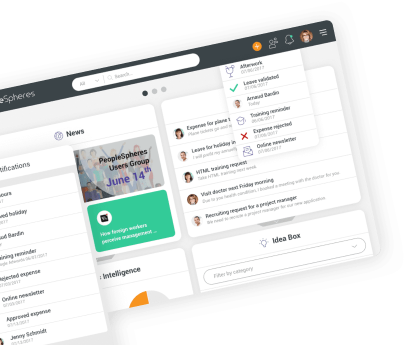
Modern HRIS platforms will have self-service portals. Employees can pull their payslips, request time off, or update personal information without getting HR involved.
Engaged employees are more productive and more loyal employees too, which are both important to ROI.
Compliance and Risk Reduction
HRIS systems typically come with automated compliance updates to keep your organization in compliance with labor laws and data protection regulations. Staying out of legal trouble and avoiding fines will also indirectly save money. This is something that is rarely calculated into the ROI.
Lower Turnover and Better Retention
HR system capabilities support the increase of positive employee experiences, personal recognition programs, and employee performance tracking. These tracking systems help managers notice dips in performance and boost employees’ morale quickly.
Measuring the ROI of an Integrated HRIS
Calculating ROI involves comparing the financial gains and savings achieved through the HRIS with the total cost of ownership.
A simple ROI formula looks like this:
ROI = (Net Benefits / Total Costs) × 100
However, beyond this formula, it’s important to consider qualitative benefits such as improved morale, better compliance, and enhanced employer branding. These may not be immediately visible in financial reports but have lasting value.
Ways to Maximize ROI from an Integrated HRIS
An integrated HR system is just one of the first steps forward. The return comes only when the system is systemically optimized and strategically invested in business goals. Below are ways the organizations can maximize the returns on investments and ensure that the technology can provide the expected immediate and future returns.
Align the HRIS Goals with the Business Goals
An HRIS cannot work in a vacuum. For it to generate real, measurable returns, it must include business goals. That includes improving employee engagement, lowering operational costs, and scaling workforce planning. HR leaders must identify with top management and incorporate HRIS functions into the mapped-out business goals.
Ensure Executive Commitment
One of the best strategies to achieve return on investment is having leadership commitment. When leaders actively support an HRIS project, trust is created within the organization, major investments are secured, and sponsorship adoption is used as a lever. Regular updates on system performance and business goals return metrics will sustain the enthusiasm.
Concentrate on Change Management and User Adoption
Even the most sophisticated HRIS can fail if employees and managers are not using it. Organizations should implement clear and concise communication, on-site training, and documentation that is easy to understand. Many companies also create explainer videos to simplify HRIS workflows and help employees adopt the system faster.
Ensure Ongoing Support and Training
Organizations frequently have training planned during the implementation phases, but fail to integrate training during ongoing phases.
Companies should invest in ongoing training to prevent employees from becoming stagnant and ensure they are using every feature. Ongoing training also reduces errors, improves data accuracy, and increases overall system usage, which helps provide better ROI.
Optimize System Use and Assess Regularly
Regular audits are vital in identifying unused features, inconsistent data, and workflows. If the performance management module is being ignored, that could likely mean the design is cumbersome or employees do not understand its purpose.
Use data to help HR in redesigning processes so that disengaged employees are re-engaged, and potential unused benefits are realized.
The Future ROI of HRIS: AI and Predictive Analytics
The new advanced HRIS systems come equipped with Artificial Intelligence (AI) and predictive analytics. These systems will be able to analyze workforce trends, attrition, and suggest customized learning paths. As these systems get better, ROI will become higher as decisions will be more proactive and data-driven.
Companies are not saving money by purchasing integrated HRIS; they are laying the groundwork for future efficiency and innovation.
Conclusion
The benefits of integrated HRIS go beyond ROI calculations. In addition to cost savings, improved productivity, and lower turnover rates, the strategic alignment of HRIS and value in organizational decision-making is associated with the ROI of HRIS systems. Lastly, the ROI of HRIS systems can also be evaluated by the return of an engaged and committed workforce.
An HRIS is more than an HR system. It is a strategic and long-term organizational and employee-driven value. Investments in and the bi-directional flow of HR information systems in the HR department will result in an ROI. Firms will also gain improved organizational agility, data-driven decision-making, and a focus on the workforce.