 PeopleSpheres
 Ever feel like finding the right candidate online is like searching for a needle in a digital haystack? You type a few keywords, hit enter, and suddenly you’re buried under thousands of profiles, most of which have nothing to do with what you actually need. That’s where Boolean search comes in.
It can be like looking for a needle in a haystack in today’s very competitive job market to find the right person. There are a lot of profiles on LinkedIn, job boards, and search engines, so managers need better tools to sort through them all. Boolean search in recruitment can help with that. Recruiters can find the best candidates faster and more efficiently with this method, based on strategy and logic.

Related articles:
What Recruitment Marketing Can Learn from TikTok Ads
How to Use AI Recruiting to Hire Smarter in 2026
What is Boolean Search?
Boolean search enhances search results across HR platforms and databases by using certain words and operators (like AND, OR, and NOT). It is named after the mathematician George Boole and enables users to mix keywords in intricate ways to produce highly focused results.
Instead of using a general search term like “marketing manager,” recruiters might use more specific terms like
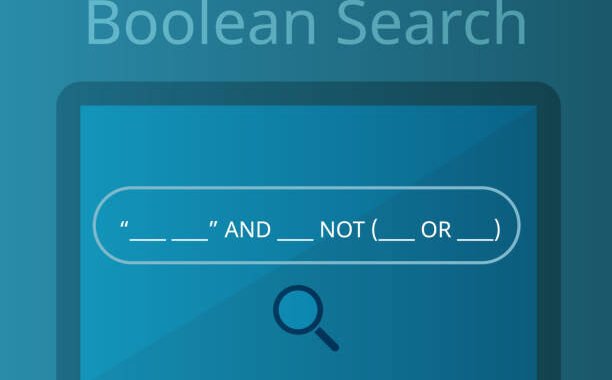
(“marketing manager” OR “brand manager”) AND (“B2B” OR “enterprise”) NOT “intern”
This string instructs the search engine to look for profiles that match brand or marketing managers, require enterprise or B2B expertise, and omit interns.
Boolean search essentially gives consumers more control over search engine results by empowering them to command the machine. It is an essential talent for hiring in the current world.
Why Recruiters Use Boolean Search?
Boolean search in recruitment is more than just a trick; it’s a must for talent acquisition experts. This is the reason:
- Efficiency Gain: Recruiters can swiftly identify the best prospects rather than having to go through hundreds of pointless profiles.
- Platform Versatility: Boolean logic is compatible with various platforms, including Google, LinkedIn, and job boards like Monster. It’s also increasingly used in tools beyond recruitment — for example, marketers leverage Boolean search within CRM and email marketing platforms to filter contacts and segment audiences more precisely, especially when researching topics like employee feedback tools or Qualtrics alternatives
- Passive Talent Hunting: Not every top prospect actively seeks employment, known as passive talent hunting. Boolean Search makes contacting passive applicants with the necessary qualifications possible.
- Customization: Whether it’s years of experience, geography, or technical skill sets, recruiters may modify search terms to fit exact needs.
According to LinkedIn’s Global Talent Trends Report, only 30% of active and passive applicants are actively seeking a job, despite 87% being receptive to new opportunities. You may access that hidden 57% by using a Boolean Search.
The Basics of Boolean Search in Recruitment: 5 Operators You Should Know
Understanding the fundamental operators of Boolean Search in recruitment is crucial for maximizing its use. As the cornerstone of every search string, these logical connections assist recruiters in focusing on specific profiles while eliminating those that are not relevant.
- AND
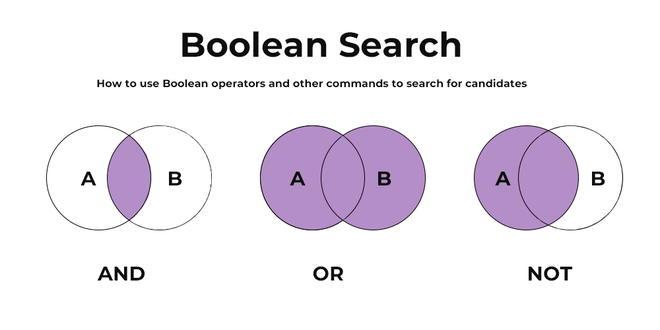
By requiring both terms to be present, this operator helps you focus your search. To assist you in identifying people with various competencies, Java AND Python, for instance, will display profiles that mention both talents.
- OR
OR takes into account profiles that use either phrase to expand search results. A developer OR engineer, for example, returns applicants with any title, which is perfect when work positions might change.
- NOT
This operator does not include some words. It will exclude profiles that include sales if you type marketing NOT sales, narrowing the results just to show applicants who are interested in marketing.
- Quotation Marks (” “)
Quotation marks guarantee that the phrases match exactly. In order to eliminate sporadic keyword matches, a search for “data analyst” will only display profiles with that same job title.
- Parentheses ( )
Complex searches are better organized with parentheses. For instance: (“ML engineer” OR “data scientist”) AND Python retrieves applicants who possess both a title and proficiency in Python.
Boolean Search for recruiters may assist them in implementing effective cross-platform tactics by helping them grasp these five components. It can increase recruiting accuracy and save time.
How Recruiters Can Optimize Boolean for Google, LinkedIn Search & Other Platforms
Recruiters must customize their strings in order to utilize Boolean Search in recruitment fully. The search engine capabilities, syntax rules, and platform filters should serve as its foundation. Pairing it with a powerful recruitment CRM software helps manage and organize the results efficiently while keeping candidate data streamlined. Understanding the subtleties of each website enables you to adjust results precisely.
- Google X-Ray Search
You may find hidden treasures all across the internet by using a Boolean Search for recruiters on Google.
Example:
site:linkedin.com/in (“full stack developer” OR “software engineer”) AND (JavaScript AND React) NOT “freelance”
With the exception of freelancers, this will display public LinkedIn profiles of applicants with full-stack or software engineering experience in JavaScript and React.
- LinkedIn Boolean Search
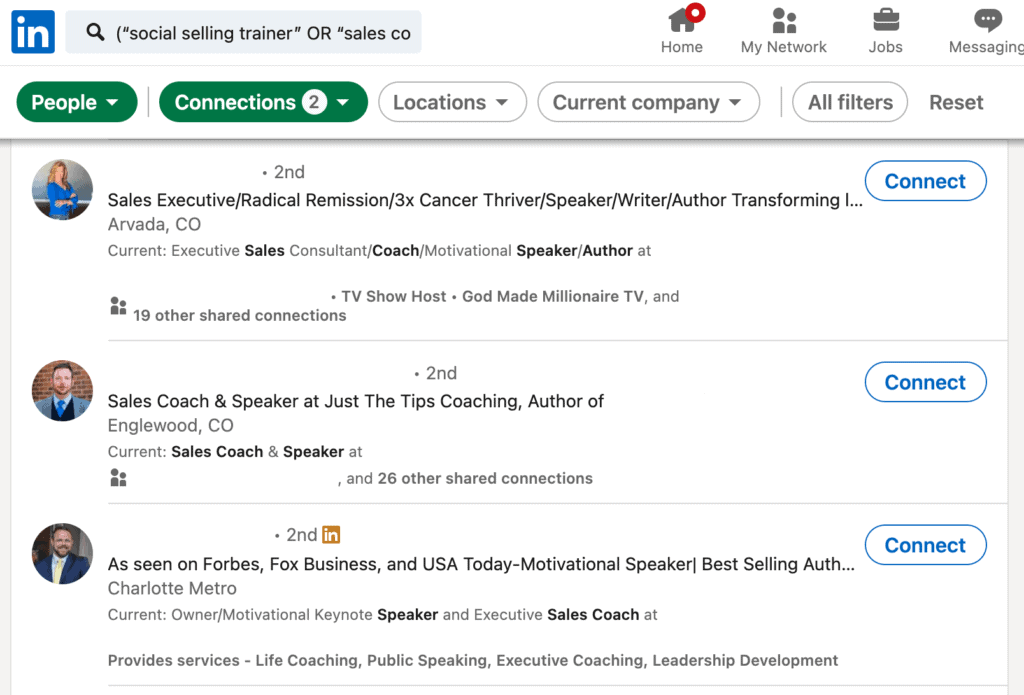
LinkedIn’s recruiter and basic keyword search bars support Boolean logic.
Advice:
- When referring to job titles, use quotes: “product manager”
- Combine the following skill sets: (“UX designer” OR “UI expert”) AND Figma
LinkedIn, however, does not accept NOT as a stand-alone operator. To exclude, use – instead: designer-graphic
- Job Boards (Indeed, Monster, etc.)
Although operator support may vary, some platforms also permit Boolean search in recruitment.
Example:
(“financial analyst” OR “business analyst”) AND Excel AND (PowerBI OR Tableau)
This aids in focusing on particular tool proficiency in possible applicants.
The Future of Boolean Search in Recruitment
Boolean search in recruitment is still a staple, but automation and artificial intelligence are the way of the future. As organizations move toward the future of hiring with AI recruitment, sourcing strategies are rapidly evolving.
63% of recruiters think AI-powered sourcing will soon become the norm, per a 2023 Aptitude Research study. However, 58% of first-level filtering still mainly relies on Boolean techniques.
Semantic search is already available in emerging technologies, where the system comprehends meaning instead of just terms. Nevertheless, Boolean offers unparalleled customization and openness.
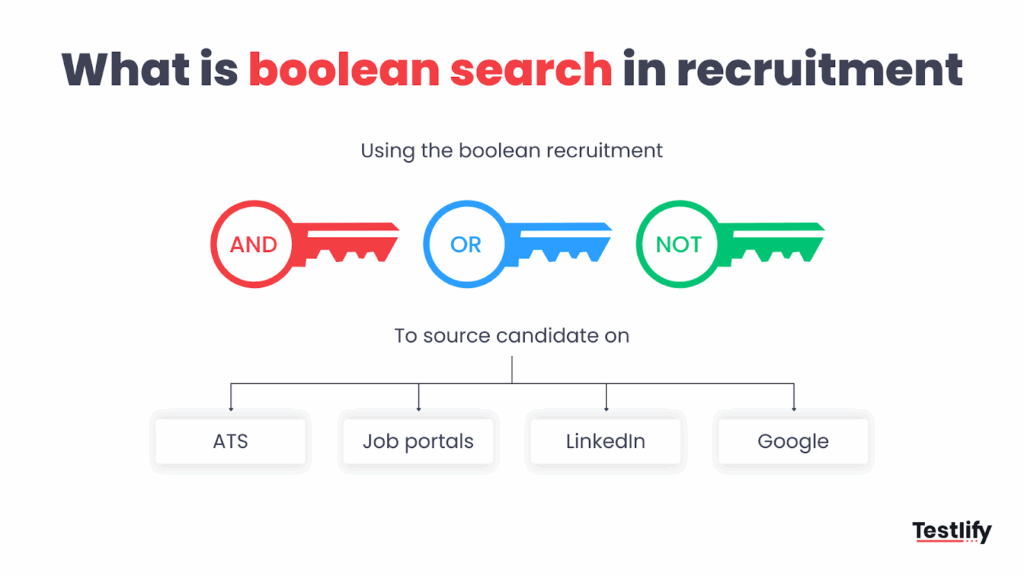
These days, specific solutions, such as Hiretual, AmazingHiring, and Entelo, combine AI with Boolean search for recruiters to generate optimum texts automatically. Additionally, these platforms verify applicants through a variety of sources. Companies can further improve recruitment workflows by partnering with virtual assistant services in the Philippines to handle sourcing, data entry, and candidate outreach tasks efficiently.
However, knowing Boolean is still crucial despite the advancements in AI. AI can’t yet completely replace recruiters’ ability to check results, adjust filters, and maintain control.
Conclusion
Boolean search in recruitment is a superpower for modern recruiters in a digital hiring environment filled with resumes and profiles. It gives precision that no conventional approach can match, cuts through the clutter, and expedites the search process.
Gaining knowledge of Boolean search can help you access untapped talent pools, regardless of your level of experience as a recruiter. Additionally, the next phase of talent acquisition will be defined by the integration of AI and Boolean logic as platforms and tools advance. Therefore, you’re already a few steps behind if you’re hiring and aren’t using Boolean search for recruiters.
Author’s Bio
Shruti is a content marketing specialist with over 3 years of experience who is currently working with Saasiffy.com in creating and sharing engaging content for various SaaS companies that connects with audiences and drives results. She is a results-driven marketer committed to delivering high-quality content that drives engagement, traffic, and conversions.
-360x360.jpg)

-640x380.jpg)